
Discover Emerging Tech with TechnoLabsz
TechnoLabsz is a practical, project-driven blog about OpenCV, robotics, programming, electronics builds, GNU/Linux, Arduino, computer vision, Python, hacking and mobile phones. Pick a topic label below to go directly to the tutorials you're looking for.
Keep up with the community:
Follow on Twitter Like on FacebookPopular Posts


Building a Touch Screen User Interface with Python
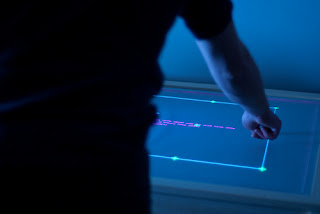
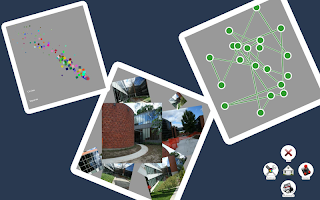
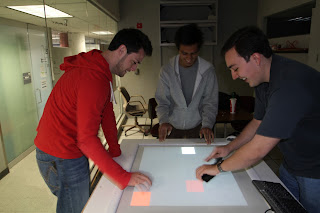
Hello everyone. Here I'd like to share two touch screen UI libraries for Python. What makes them stand out is their simplicity — you can put together a solid touch interface in just a few minutes. The two well-known Python libraries are PyMT and Kivy.
PyMT
PyMT is an open-source library for building multi-touch applications. It is fully cross-platform (Linux/OSX/Win) and distributed under the GNU LGPL. It offers native support for many multi-touch input devices, a growing set of multi-touch widgets, hardware-accelerated OpenGL rendering, and an architecture that lets you concentrate on creating custom, highly interactive apps as quickly and easily as possible. Because PyMT is pure Python, you can leverage its dynamic nature and use any of the thousands of high-quality open-source Python libraries available.
For further information, see: http://pymt.eu/
Kivy
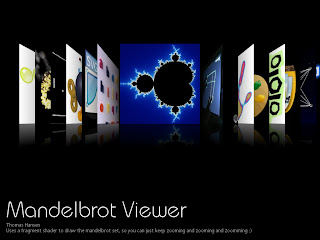
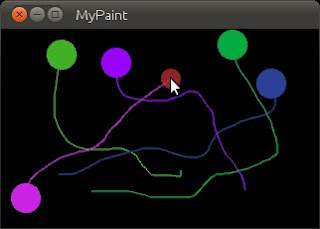
Kivy is an open-source library for quickly developing apps with innovative user interfaces, such as multi-touch apps. Kivy runs on Linux, Windows, MacOSX and Android, and the same code works across all supported platforms. It natively supports most input protocols and devices, including WM_Touch, WM_Pen, Mac OS X Trackpad and Magic Mouse, Mtdev, Linux Kernel HID and TUIO. A multi-touch mouse simulator is also included.
For further information, see: http://kivy.org/#home
Give it a try...
Posted by Lentin Joseph
1 comments Email This BlogThis! Share to X Share to FacebookLabels: Programming, Touch User Interface
Speech Recognition and Synthesis in Python
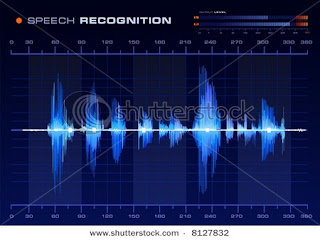
Hello everyone. This post is aimed at anyone working on speech recognition and synthesis projects. The approach here is straightforward to implement. Speech recognition and synthesis are still evolving, and no perfect speech tools exist yet. Here I present one method for doing this. It isn't highly accurate, but careful training can reduce the error. The required tools are listed below. The working platform is Windows XP.
- 1) Python 2.6 for Windows — http://www.python.org/getit/releases/2.6.6/
- 2) Windows Speech SDK — http://www.microsoft.com/download/en/details.aspx?id=10121
- 3) Python Speech Module — http://code.google.com/p/pyspeech/
- 4) Good Speech Voices — http://cepstral.com/downloads/ (Not free)
These are the items you'll need. Before starting, verify that the microphone works and check the speakers as well.
- 1) Install the voices first or use the default voice of Windows (MS Sam).
- 2) Install Speech SDK: After installing Speech SDK, we need to train the speech profile for getting good accuracy. The option for training is available in Control Panel. We can export and import the training profile, so you can train on one system and move to another system without re-training. The tool for import/export is given below. Profile Manager: http://www.microsoft.com/download/en/details.aspx?id=22358
- 3) Install Python 2.6.
- 4) Install speech module: Here is the command for installing the speech module. Take a command prompt and change the path to the speech module folder path. Enter this command after that: python setup.py install
- 5) Installation done.
Testing Speech-to-Text and Text-to-Speech in Python
import speech
while True:
phrase = speech.input() #Convert Speech to text
speech.say("You said %s" % phrase) #Convert the converted text to Speech
if phrase == "turn off": #if the text is turn off, it will quit
break
For more details, refer to this link: http://code.google.com/p/pyspeech/
Posted by Lentin Joseph
2 comments Email This BlogThis! Share to X Share to FacebookLabels: Speech Recognition
Getting Started with OpenCV
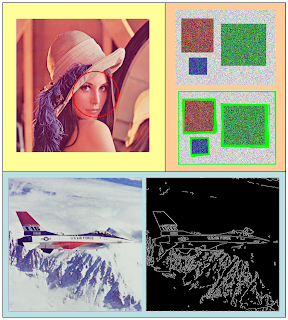
Hello everyone. I recently came across some excellent websites about the OpenCV library and wanted to share a few links here. This article was originally published in SERVO magazine.
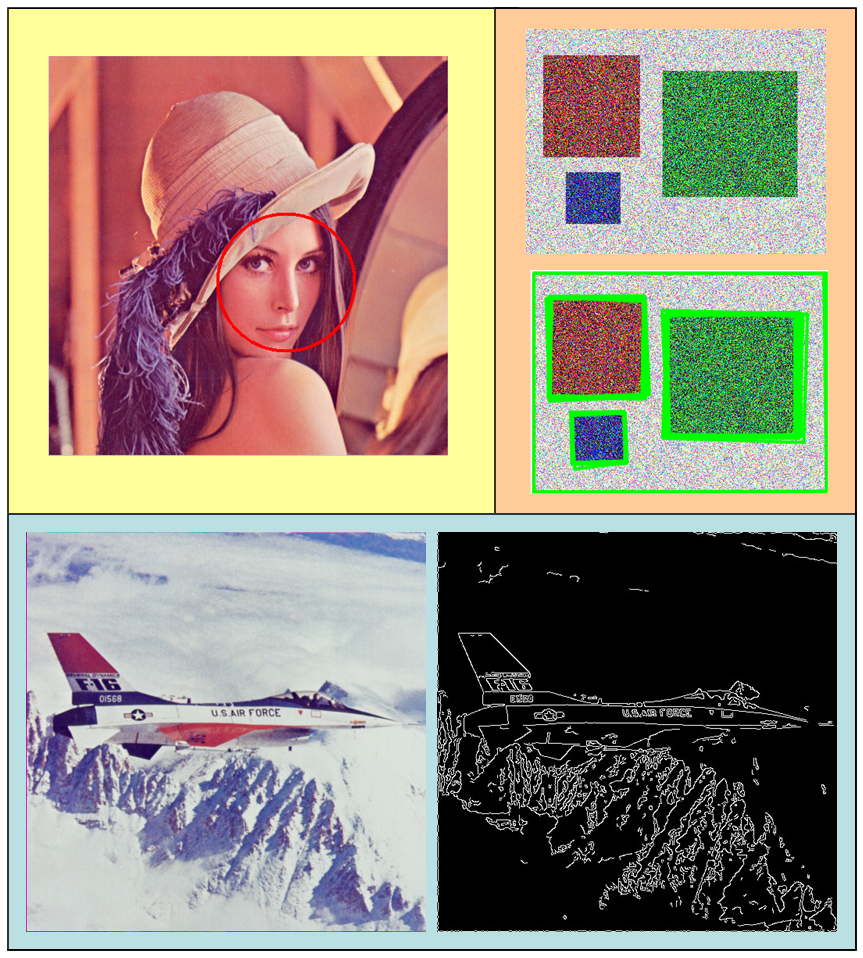
OpenCV, Intel's free, open-source computer-vision library, can make computer-vision programming much simpler. It offers advanced features — face detection, face tracking, face recognition, Kalman filtering, and various artificial-intelligence (AI) methods — ready to use out of the box. It also supplies many basic computer-vision algorithms through its lower-level APIs. Understanding how these methods work is essential to getting good results with OpenCV. In this five-part series, I'll introduce OpenCV and show you how to use it for face detection, face tracking, and face recognition. Then I'll go behind the scenes to explain how each method works and share tips and tricks for getting the most from them. This first article introduces OpenCV. I'll explain how to obtain it and give a few pointers for setting it up on your computer. You'll learn to read and write image files, capture video, convert between color formats, and access pixel data — all through OpenCV interfaces.
OpenCV at a Glance
OpenCV is a free, open-source computer vision library for C/C++ programmers. Download it from http://sourceforge.net/projects/opencvlibrary. Intel released the first version of OpenCV in 1999. It originally depended on Intel's Image Processing Library; that dependency was later removed, so OpenCV now works as a standalone library. OpenCV is multi-platform, supporting Windows and Linux and, more recently, MacOSX. Apart from one exception (CVCAM, described later in this article), its interfaces are platform independent.
Key Features
OpenCV packs so many capabilities that it can feel overwhelming at first. Fortunately, you only need a few to get started, and I'll walk you through a useful subset in this series. Below is a summary of the main functionality categories in OpenCV version 1.0, which had just been released when this was written:
- General computer-vision and image-processing algorithms (mid- and low-level APIs). Using these interfaces, you can experiment with many standard computer-vision algorithms without having to code them yourself. These include edge, line, and corner detection, ellipse fitting, image pyramids for multiscale processing, template matching, various transforms (Fourier, discrete cosine, and distance transforms), and more.
- High-level computer-vision modules. OpenCV includes several high-level capabilities. In addition to face detection, recognition, and tracking, it includes optical flow (using camera motion to determine 3D structure), camera calibration, and stereo.
- AI and machine-learning methods. Computer-vision applications often require machine learning or other AI methods. Some of these are available in OpenCV's Machine Learning package.
- Image sampling and view transformations. It's often useful to process a group of pixels as a unit. OpenCV includes interfaces for extracting image subregions, random sampling, resizing, warping, rotating, and applying perspective effects.
- Methods for creating and analyzing binary (two-valued) images. Binary images are frequently used in inspection systems that scan for shape detection.




Whether you're exploring multi-touch interfaces with PyMT and Kivy, experimenting with speech recognition and synthesis in Python, or taking your first steps into computer vision with OpenCV, the tutorials in this archive are meant to be tried hands-on. Follow the topic labels to find related posts on robotics, Arduino, GNU/Linux and more.